
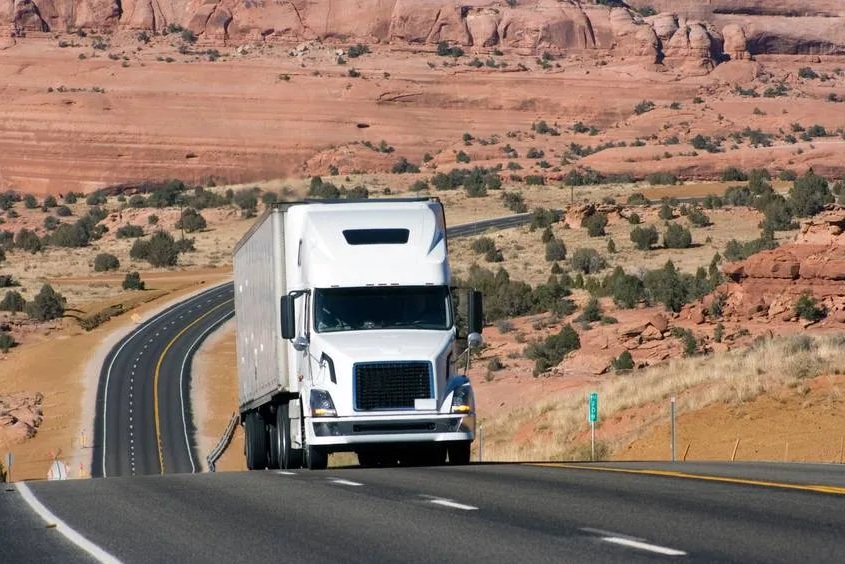
Sharing the road with large commercial trucks requires extra caution, particularly when navigating intersections, making turns, or traveling through congested areas. One potentially dangerous situation occurs when a passenger vehicle becomes trapped between a turning tractor-trailer and a curb, wall, or other obstacle. This type of collision is commonly referred to as a squeeze-play truck accident.
Squeeze-play accidents can cause devastating injuries because of the significant size and weight difference between commercial trucks and passenger vehicles. Even at relatively low speeds, a turning tractor-trailer can crush a smaller vehicle or push it into a nearby obstacle.
Fortunately, understanding how these accidents happen and recognizing the warning signs can help motorists avoid dangerous situations.
What Is a Squeeze-Play Truck Accident?
A squeeze-play truck accident occurs when a smaller vehicle becomes trapped between a commercial truck and a nearby object, such as a curb, guardrail, wall, or another vehicle.
These accidents most commonly happen when a tractor-trailer makes a wide right turn.
Because of their length and turning radius, large trucks often need to move toward the left side of their lane, or sometimes into an adjacent lane, before completing a right turn. This maneuver creates enough room for the trailer’s rear wheels to safely navigate the corner.
However, when a truck moves left, a passenger vehicle traveling behind it may mistakenly assume the truck is changing lanes or continuing straight.
If the motorist attempts to drive into the open space along the truck’s right side, the smaller vehicle may become trapped as the truck begins turning.
The Federal Motor Carrier Safety Administration (FMCSA) specifically warns motorists against driving between a turning truck and the curb because of the risk of a serious collision.
1. Never Pass a Truck That Is Making a Wide Turn
One of the most important ways to avoid a squeeze-play accident is to never attempt to pass a tractor-trailer while it is turning.
When a truck begins moving left before making a right turn, the space along its right side may appear to be an opportunity to pass. However, that opening can disappear quickly once the truck begins turning.
Read More: Is Yamaha Mt 15 the Street Bike You Should Not Miss
Even when there seems to be enough room, the rear portion of the trailer may swing into the space occupied by your vehicle.
Instead, remain behind the truck and allow it to complete its turn before proceeding.
2. Stay Out of a Tractor-Trailer’s Blind Spots
Large commercial trucks have substantial blind spots, often called No-Zones, along both sides, directly behind the trailer, and immediately in front of the cab.
These blind spots can make it difficult for truck drivers to see nearby passenger vehicles, particularly when navigating tight intersections.
The right-side blind spot is especially dangerous during wide right turns because a motorist entering this area may be difficult for the truck driver to detect.
As a general rule, if you cannot see the truck driver’s face in the side mirror, you should assume the driver may not be able to see you.
Avoid lingering alongside commercial trucks, and never rely on the assumption that a truck driver knows your vehicle is nearby.
3. Pay Attention to the Truck’s Turn Signals
Turn signals can provide important clues about a truck driver’s intentions.
If a tractor-trailer activates its right turn signal, anticipate that the truck may need to move left before beginning its turn.
However, motorists should also recognize that not every truck driver signals correctly or early enough.
Rather than relying exclusively on turn signals, observe the truck’s overall movement, speed, and position within the roadway.
If a truck begins slowing down or maneuvering unusually near an intersection, give it additional space until its intentions become clear.
4. Maintain a Safe Following Distance
Following a tractor-trailer too closely can make it difficult to recognize when the driver is preparing to turn.
Maintaining a safe following distance gives you more time to react to unexpected maneuvers and helps improve your visibility around the truck.
It also reduces the temptation to move into an open space beside the trailer when traffic slows.
Remember that commercial trucks require more space to maneuver than ordinary passenger vehicles. Allowing additional room at intersections and turns can significantly reduce the risk of a collision.
5. Avoid Passing Trucks Near Intersections
Intersections are particularly dangerous locations for squeeze-play accidents because large trucks often need additional space to complete their turns.
If you are traveling alongside a tractor-trailer approaching an intersection, avoid positioning your vehicle next to the trailer when the truck may be preparing to turn.
When passing is necessary, wait until the truck is traveling straight and you can complete the maneuver safely and legally.
If you are unsure whether the truck is turning, changing lanes, or continuing straight, the safest approach is generally to remain behind it until the maneuver is complete.
6. Be Patient and Give Large Trucks Extra Space
Patience is one of the simplest ways to avoid dangerous interactions with tractor-trailers.
Large trucks accelerate, brake, and turn differently from smaller passenger vehicles. A maneuver that appears unnecessary or unusually slow may actually be required for the driver to navigate the roadway safely.
Avoid honking aggressively, attempting to squeeze through narrow gaps, or rushing around a truck that is preparing to turn.
The FMCSA emphasizes that motorists should allow large trucks additional space and time to complete wide turns safely.
Waiting a few extra moments is far safer than attempting to pass a commercial truck in an unpredictable situation.
What Should You Do If You Become Trapped Beside a Turning Truck?
Despite taking precautions, motorists may occasionally find themselves dangerously close to a tractor-trailer that begins turning.
If this happens, try to remain calm and avoid making sudden, unpredictable movements.
Do not accelerate into a narrowing gap or attempt to force your way past the truck. If there is a clear, safe escape route, use it carefully. Otherwise, stop if possible, alert the truck driver using your horn, and avoid moving into the truck’s path.
Never assume the truck driver can see your vehicle or will immediately recognize the danger.
If a collision occurs, seek medical attention for injuries and contact emergency services when necessary.
Understanding How to Prevent Squeeze-Play Truck Accidents
Squeeze-play accidents are a serious hazard when passenger vehicles and large commercial trucks share busy roads and intersections.
Because tractor-trailers need extra space to make turns, smaller vehicles can become trapped when drivers misinterpret a truck’s movements or attempt to pass through a narrowing gap.
The most effective ways to reduce the risk are simple: stay out of truck blind spots, anticipate wide turns, maintain a safe following distance, and never attempt to squeeze between a turning truck and the curb.
While motorists should exercise caution around commercial trucks, truck drivers and trucking companies also play an important role in preventing these potentially devastating collisions.
Understanding these risks can help everyone share the road more safely.